Wednesday, October 27, 2010

Lady Gaga's Dick and the Queer Mainstream (#10)

In Cynthia Fuchs's essay "If I had a Dick: Queers, Punks, and Alternative Acts" (1998), a link is made between the punk aesthetic of "confusion...mounting a particular challenge to linearity, binarism, and coherence" and queer culture, the two subcultures not being as different as they may seem. This aesthetic has lately (and perhaps finally) broken through to the mainstream in the form of Lady Gaga.


Gaga has exploded into Pop dominance in less than three years. She, like Madonna before her, got her start in the gay community and dance clubs of New York City. And, also like The Material Girl, she gained notoriety in the punk scene (Madonna got her start playing drums in a punk band), or at the very least, incorporated the punk aesthetic into her act. Gaga's persona was also instantly identified as part of the queer community. When she first gained notice, many jokes and comments were made insinuating she was a dude and has a dick (this is referenced in the video for Telephone where she's strip searched and one butch female guard says to another, "I told you she didn't have a dick.")
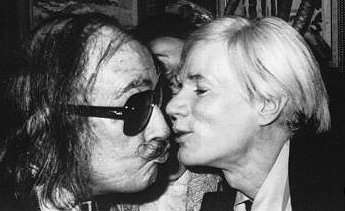
Gaga seems to be the living embodiment of Fuchs Queer Punk prophecy, only also heavily influenced by Pop Art and Warhol.

Punks and Queers, these social deviants/marginalized citizens of mainstream society, have always managed to make their presence known by defying the status quo and subverting the everyday through their art. They deny the existence of the "mainstream", seeing it as having no more relevance than the subculture. Members of countercultures pride themselves on their individuality and refusal to accept the trappings of society, and strive against the commercializtion of their ideals. The rebels, the unpopular cast-offs and hooligans, renounce the need for acceptance and stand against categorization and standardization.

Gaga, however, represents a new movement that is breaking this tradition. The avant-pop movement defies the usual platform of subcultures because it has always desired commodification. Gaga and her Little Monsters of today's youth have grown out of a mass media saturated society. Rather than yearning for the destruction of the mainstream it seeks to use the elements of conventional society to create a newly altered yet still marketable reality, one that exists on the outside of the mainstream but is fed from within.

The role of a subculture is to subvert the mainstream. Punk culture took what they saw in the mainstream world, the resources and commodities available to them, and reimagining them in a way that was meant to shock and outrage the powers that be (as well as allowing the artists to purge and vent their frustrations). Once a subculture is picked up byt the matinstream, the dominating force will attempt to understand the new materials and realities created by making them seem more relatable to the average citizen. At this point the subculture loses its charm, its resistance to commodification has been superceded by the dominant's way's need to commercialize in order to understand.

This new wave of pop artists long to be exploited. The participants in the avant-pop culture were raised in a mass media created and directed reality. Therefore, rather than eschew the accompaniments of the conventional, tney instead embrace them, they take what they see and attach new meanings as the punks did but they do it in a way that screams for attention. No one witin the movement wants to hide from the mainstream world. Tney want i tinfiltrate it and use its own mechanism against it.

Lady Gaga emerged as the the flag bearer for avant-pop. Her first single, Just Dance, debuted at the top of the Billboard Chart, followed by five consecutive hit singles and a famous performance on the MTV awards, where she dressed like a cross between the Phantom of the Opera and a lingerie model and screamed and bled all over the place. Her success seemingly came out of nowhere but in fact the cultural storm she rode in on had been brewing long before the young star put on her first pair of stilettos. The mixture of synthesized dance beats with catchy rhythms, the bastions of pop music, combined with her bizarrely explicit lyrics and art-damaged Euro fashion sense was exactly the cocktail needed to propel the avant-pop world into the spotlight it had alway slonged for. Her predecessors of successful yet strange/queer pop stars include Bjork, Cyndi Lauper, David Bowie, Yoko Ono, and the group Queen, for who she's named after (the song Radio Gaga). She set out to become the "pop star for misfits and outcasts", encouraging her following of "Little Monsters" to be themselves at all times, damn what society may say. Gaga also has a hand in every aspect of production, from concept to costume, overseeing everythingin her her Warhol's Factory-inspired Haus of Ga. She attempts to beautify the grotesque, carrying on the queer, punk, avant-pop aesthetics with a heavy dose of performance art.

Fuchs mentions that queer visibility is "less a loss of authentic marginality than an invasion and expansion of the mainstream. Punk emulates a kind of acting out and giving in, simulating resistance to exacerbate lingusitic and generic instabilities, acting out and acting up to kick listeners into gear. Transforming the mainstream-injecting it with good music, no less- queer punk translates experience into performance and vice versa, collapsing expression onto identity, fiction onto productive politics."

The commodification of subcultures will continue as long as there is a battle between the popular and the marginalized. Those in control of the mainstream will always try to understand the fringe, and will especially always try to make money off of it. Once commercialized, many subcultures simply fade out, as the unification of outsiderdom no longer applies and the members of the groups become what they were initially fighing against. The avant-pop movement, breaking through in today's world with stars like Gaga, is ulike others because it not only seeks but thrives on popular commercialization. The more the pop culture machine pushes the avant-pop movement towards standardization, the more fuel the artists and fans have for their fire. This is one subculture that seems to resist the death sentence that is commodification and will continue to resist as the media and the world it creates changes with the times.



Friday, October 15, 2010

Slash Fiction (#8)


Henry Jenkin III's essay "Star Trek Rerun, Reread, Rewritten: Fan Writing as Textual Poaching", from 1991, deals with the way fans interact with pop culture texts. Borrowing an idea from Michel de Certeau (consumers as "poachers"), Jenkins asserts that fans take their personal relationships to shows/texts and then share them with other fans in a process that makes the text their own through appropriation/reappropriation.

 (Kirk & Spock in Star Trek: The Motion Picture)

In the final section of the essay, Jenkins writes about K/S fiction (Kirk/Spock), and writing in the early 90s, he was unable to see what a profound influence the internet has had on this subgenre. The internet provided a way for these fans of homoerotic K/S fiction to share and form a much larger community than ever before. 
I came of age in the 90s. I hit puberty somewhere around '94 and was part of the first generation to experience interest in pornography and the rise of the internet at the same time. This collision enabled many young people to explore and dabble in elements of sexuality they may have never been exposed to before. I distinctly remember surfing around for naughty pics and stumbling onto a site housing nothing but "slash" fiction. I had no idea what "slash" was at the time (other than the guitarist from Guns N Roses). Hell, I barely even knew I was gay (yes, even while looking for pictures of naked men) much less the intricate and varied subcultures that were making up the "scene" at the time.


So, what is Slash Fiction? Jenkins writes about K/S fiction, in which fans write stories exploring the perceived homoerotic relationship between Captain Kirk and Mister Spock from Star Trek. Throughout the 1980s, K/S fiction began to dominate the Trek-fan fiction genre. This caused all sorts of scandal, since writing scenes of hard-core sex between beloved male, heterosexual characters is about as close to literal "character rape" as you can get. Jenkins argues that K/S fiction only does openly what all fans do covertly and that objections to K/S stem from discomfort with human sexuality.


As you may have guessed, "slash" fiction as a term evolved from the / symbol in K/S. For awhile it was interchangeable to either write Slash or K/S to denote homosexual, erotic fan fiction. By the time I stumbled upon the genre in the 90s, it was just Slash. The stories seem to have started with Star Trek in the late 70s, but soon spread to include Starsky & Hutch, Dukes of Hazzard, and other 80s series. During this time, Slash was hard to find. It was only printed in 'zines and collections. Then...the internet. Soon, slash fiction involved characters in everything from L.A. Law, Buffy, and Marvel Comics to Harry Potter, X-Files, and N'Sync. Another subgenre developed from "celebrity slash" that deals in fantasy sexual encounters between same-sex celebrity figures.


I am not a consumer of slash fiction (the novelty wore off real fast and trust me when I say these things aren't written by D.H. Lawrence), but I find it fascinating and was excited to see it's formative years explored by Jenkins in his essay. Slash fiction exists as a literal example of "poaching" from a popular text and reappropriating it for radical and subversive means.

Friday, October 8, 2010

Scream and the use of Symbolic Creativity (#7)


(Scream 4 trailer)


There's been a lot of hype and talk about the April release of Scream 4, a return to the film franchise that made "meta" a household name and gave critics the reason to use "post-modern" and "horror" in the same breath. All of the principle actors are back (Neve Campbell, Courtney Cox, David Arquette), screenwriter Kevin Williamson worked on the story, and legendary horror director Wes Craven is back at the helm. 


Looking at the article "Symbolic Creativity" by Paul Willis, I was struck at what a perfect example this particular horror series is for Hollywood appropriating the type of creative consumption Willis is writing about.Willis makes the case that young TV viewers are able to enjoy shows that a high artistic aesthetic because they have an awareness of "visual forms, plot conventions and cutting techniques" and this awareness transforms otherwise "banal, contrived, and formalistic" texts into relatable narratives. The original product is just the "raw materials" for symbolic creativity.

In Scream, the slasher genre is used as the "raw materials", and the film addresses the youth culture of the 90s in which all the young characters have seen the films of the genre over and over. Generation Y, raised on MTV and VHS, has memorized the tropes and conventions of the horror genre and feels superior to the genre, or rather, is no longer easily scared. Legions of young people in the 80s and 90s watched these films, legitimized them, and felt safe with them. Williamson and Craven found a new way to scare this generation by recognizing their superiority to the genre and then turning that on its head. The killer(s) in the Scream films play on the characters' (and audience's) knowledge of the conventions and exploit them to maximum effect. In the opening scene (and probably still the best scene in the franchise), Drew Barrymore is menaced by a killer who turns Movie Trivia into a life-or-death trap.


Craven should be given much credit for his direction. The films still hold up and are pretty enjoyable as thrillers and mysteries (the third one is pretty bad but is entertaining on a comedic/camp level). Craven had already established a cutting style that young audiences respond to (see Nightmare on Elm Street and its MTV-influenced style) and even dabbled in meta-fiction years earlier (Wes Craven's New Nightmare). Not to mention his past with "trash" classics Last House on the Left and The Hills Have Eyes.

I'm looking forward to the fourth film, if for no other reason than to feel fifteen again and have my nostalgia receptor stimulated. I doubt Williamson and Craven will be able to find a way to scare my generation again by playing with conventions about...playing with conventions. But who knows? I'll be very happy if they do.

Friday, October 1, 2010

Popular Discrimination (#6)

We're finally up to the point in class, as we stroll through popular culture theory history, where popular art is starting to be shown some love. I was wondering if I had picked the wrong topic for this blog, since every form of popular culture I love and hold dear has been demeaned and put-down week after week, but now, FINALLY, we're getting to the post-modern era and the triumph of the masses. The first wave of culture critics were concerned that the influence of the masses would corrupt the aesthetic of the arts. I'm sure some would still hold this view (conservative Bush era's National Endowment of the Arts was strictly used for "American Classics" painters. No boat-rocking Piss Christ's allowed.)

This week's essay by John Fiske, "Popular Discrimination" (1991), argues that popular culture does indeed contain the kinds of artistic truths that highbrow art does, but that it is decoded through the societal needs and experiences of the reader/viewer. Fiske points out that the vast majority of popular entertainment does not succeed and fails to find an audience. If the masses were indiscriminate, then why do a small fraction of releases gain blockbuster status or reach saturation-level appeal?


This is what my blog is essentially about! The cross-section between "crap" and Trash. It is about how John Waters can be the "Pope of Trash" and exalt forms of art once thought to be utterly worthless (like nudist nature films and Old Reliable trailer porn) and yet we all coexist in a culture where there are still works being made that ARE deemed utterly worthless. The Room (pictured above) can somehow simultaneously be one of the worst movies ever made and also a huge, massive cult hit every month when shown locally at The Plaza here in Atlanta.

The selection of certain films to be deemed "cult" classics is one of my favorite subjects in popular culture. I am a big fan of The A.V. Club's Cult Cannon and My Year of Flops blogs, which dissect particular films in these cannons each month. (The first published collection of Flops, My Year of Flops has just been released and I am looking forward to owning it. Perfect bathroom reader!)

Here's a selection of a few of my own examples of films saved from extinction by various "cults" of film lovers.

Or what about these now-classic films? Dismissed by "highbrow" critics and now hailed by subsequent generations as timeless works of art?


This highly regarded classic cost (adjusted for inflation) $43 million to produce and only made $46 million in its initial theatrical run. Through the diligence of MGM, re-releasing a decade later and then airing it annually on television, a mediocre box-office draw is now remembered as being one of Hollywood's earliest hits.

Willy Wonka and the Chocolate Factory grossed a dismal (adjusted for inflation) $20 million in its initial run. But television saved it, as well as the invention of Home Video. It became a children's classic in the 1980s and by it's remake in 2005, was deemed by some to be untouchable. 

1983's A Christmas Story was critically written off and was almost out of theaters by the time Christmas actual hit a month after its release. Home Video and television gave it a new life, leading to critics hailing it now as a holiday classic.

That's not even mentioning genuine crap like The Room or Plan 9 From Outer Space that are enjoyed by legions of fans BECAUSE they're awful.

The way we view "bad" art, what these films mean to us and why we cherish them, how we decode their texts, is going to be the premise for the rest of this blog as well as the articles we'll be reading in class.

Friday, September 24, 2010

Don't say the Z'ed word! (#5)

I mentioned in a previous post that I wanted the chance to cover Italian horror, like Fulcci's Zombi.


After our viewing of Shaun of the Dead, I realized that a look at the zombie genre and its connection to Marxism may be the closest chance I get to having an excuse to put the above picture up on my blog. Oh, and also this awesome scene with an eyeball and a piece of wood....


(from Zombi)

The term Zombie has been around in western culture since the 1929 publication of Willie Seabrook's novel The Magic Island, which described the Haitian voodoo phenomenon now attributed to zombies (see The Serpent and the Rainbow). This was followed by a series of stories by H.P. Lovecraft that contained similar themes. The first zombie motion picture is considered to be White Zombie, a take on the Seabrook story by director Victor Halperin. Many point to the film adaptation of H.G. Well's Things to Come as the first modern zombie tale, in that it features a "sickness" that affects the population instead of a ritualistic, voodoo zombie.

Zombies stayed around as part of the sci-fi/horror/b-movie landscape for the next several decades, popping up in films like Plan 9 From Outer Space and other cheese classics as well as EC comics Tales From the Crypt and the I Am Legend/The Last Man on Earth combo in the 1950s.

Then, along came George Romero, and with him the use of the zombie as political metaphor. Romero's seminal horror film from 1964, Night of the Living Dead.


Romero's reinvention of zombies is notable in terms of its thematics; he used zombies not just for their own sake, but as a vehicle "to criticize real-world social ills—such as government ineptitude, bioengineering, slavery, greed and exploitation—while indulging our post-apocalyptic fantasies"-
http://www.greencine.com/static/primers/zombies1.jsp

Romero's Marxist parallel comes closest to full-blown realization with his 2005 film Land of the Dead. Coming right at the heels of Bush Jr.'s "political mandate" of 2004, Land imagines a not-too-distant future where zombies run amok and the elite are housed in a giant high-rise/mall, safely out of the zombie's reach. Soon, though, a more highly evolved zombie begins teaching the other zombies how to use tools and they storm the gates of the rich in a feeding frenzy.


How's that for an "Eat the Rich" manifesto?! I remember seeing the film in theaters in 2005 and thinking how explicit the metaphor was (much the same way people criticize Machete today...read this fucking crazy blog post: http://minx.cc/?post=305379). However, I think that's the point. Dawn of the Dead, hailed as Romero's masterpiece, uses the setting of a shopping mall as an overt political metaphor. Each Romero film builds on the times surrounding it.  Time and distance will one day make people look at Land of the Dead as a snapshot of life in the second half of the Bush years, with Katrina and Iraq and all the madness buffered by extreme wealth and extravagant living.

Which brings me back around to Shaun of the Dead. I adore this movie. It's nasty, charming, and also deeply political in its own way. Edgar Wright takes Romero's metaphor of zombies as workers in a capitalist society and inverts it, making the surviving humans the workers and mining this for comedic value. The underlying message seems to be that only friendship and human relationships (Shaun and his buddy, his girlfriend, even his stepdad) can lift us out of the horrors of banality that accompany life in modern society. The most brilliant aspect of Shaun is how long it takes the lead character to notice the zombie outbreak has occurred. Wright seems to show the western worker drone as being more brain-dead and "asleep" then the zombies themselves. Or rather, there is not much difference between them.


The zombie, a uniquely 20th century monster, paved the way for movie monsters to be political. The wave of vampires, werewolves, and other baddies with underlying political metaphors and chips on their shoulders owe a lot to their Zombie Comrades.

Summer 2010: Saved by Trash

This summer movie season was dismal, to put it kindly. Potential franchises and sequels were mostly D.O.A. (Prince of Persia, A-Team, more Shrek and Sex & the City). There were only a handful of smart, well-written films for adults (Inception, The Kids Are Alright). So, where were the fun surprises to be found? In the B-Movie/Camp Genre of course!!

In my trash-loving opinion, the two best summer films of 2010 were Piranha 3D and Machete.


Piranha 3D was tits-tastic, with a self-aware cast that was having a blast making this gorefest. Seriously, I think maybe only the opening of Saving Private Ryan rivals this film for the sheer carnage packed into a twelve-minute chunk of scene. You have to see this (the 3D, as usual, is totally arbitrary and useless so check it out on DVD if you want). 


Machete, by Robert Rodriguez, improves upon his already-delightful grindhouse feature, Planet Terror. with another B-movie throwback. This one (based on a trailer from his collaboration with Tarantino, Grindhouse) is about a Mexican hitman, set up by Gringo bad guys to kill a senator. Right off the bat, we are given scene after scene of inventive, funny ways of destroying people with gardening tools. Rodriguez uses the whole, silly thing as a statement on immigration in the U.S.
Most of the critics I've read have derided the movie's political message, calling it obvious and over-the-top. Well....DUH! This is a grindhouse film of the MEXploitation genre. It would be inappropriate for this movie to NOT deal with politics. Blacksploitation and Mexploitation films of the 70s were often loaded with political symbols and messages. Sure, Machete outdoes them all with the image of Robert De Niro dressed as a migrant field worker tied to a fence and riddled with bullets. Or Jessica Alba, as an INS officer, siding with the illegals and yelling "We didn't cross the border! The border crossed us!"
Oh. And Lindsey Lohan's titties are in it. And she's in a nun's habit firing a shotgun.

I loved these movies. They are both perfect representations of the types of films this blog is dedicated to. They were also blasts of fresh, 70s air in a summer full of stifling, overheated misfires.

Friday, September 17, 2010

Disney Touched Me Inappropriately (#4)

The true story of how The Walt Disney Co. spent the turn of the century raping my childhood.


Janet Wasko's famous expose on Disney in 2001, Understanding Disney: The Manufacture of Fantasy, sheds much light on a company that many in my generation feel betrayed by. The greedy, downright mean (bullying day care centers? really?!) tactics employed by Disney to retain its stranglehold on childhood come as no surprise, but serve as reminders of how impressionable we are as kids and how masterfully Disney has dominated the childhood "market". 

I came of age during the "Disney Renaissance" of 1989-1999. It was during this period that the studio released The Little Mermaid, Aladdin, Beauty and the Beast, and The Lion King. They also regularly re-released their classic films to theaters before this (the 80s) and I saw everything from Snow White to Sleeping Beauty and Pinocchio on the big screen as a kid. These films (along with Who Framed Roger Rabbit? and the modern Mickey Mouse Club...yes, with Justin and Britney) had a profound influence on me, not just on my imagination and work as a writer, but on my role as a consumer. I was taught HOW to watch television and films by Disney. I was shown how limitless the imagination could be. 

I adored Disney. I wrote my first biography paper in the fifth grade on Walt. I begged my parents to let me have the then-suscription based Disney Channel on cable. I watched the Electric Light Parade at Walt Disney World as a five-year-old and can still remember its sights and sounds. 

Then, two things began to happen that would combine to destroy my love for the House of Mouse. First, I began to learn (as we all did) in the early 2000s, as I began college, about Disney's awful business practices. These are detailed in Wasko's essay. 

Honestly, I could have handled it. I mean, by the early 2000s we were all used to finding out corporations were secretly evil. By 2000 it was obvious we had falsely-elected corporatist president and we were on our way to a decade(s?) long war(s) that decimated the middle class while the Disney camp and other corporations like them made record profits. 

I could have handled all of this. I mean, I still watched MTV even though it was clearly corporate and Viacom evil.  But then...came the sequels. 


WTF?! The Fox and the Hound TWO???? How is that even possible? That movie ends with Copper and Tod realizing they can no longer be friends after adolescence because, you know, one is a fox and the other is a fucking hound dog! It is a gut-wrenching ending that is also perfect and helps kids deal with the ideas of growing up and loss. But hey, why don't we make a crappy direct-to-dvd sequel 25 YEARS LATER! 

Yes, it began with the sequels. Suddenly, and at an alarming rate, all of my generation's (actually EVERY generation since the 1930s) favorite movies and beloved childhood fables began to get rush-job hack sequels. 

Most of these movies involve the KIDS of the original film's characters getting into the EXACT SAME ADVENTURES their parent's did in the original. It is almost as if Disney is admitting that these stories, around for generations, aren't good enough for today's children. They must need a new, modern take on these classics! You know, one that kids can relate to!

Well....I call bullshit. One of the best things about Disney is they way their classic films can be watched by someone as they are growing up, and then shared with that someone's kids. It bridges the gap between generations. It gives us all the same imaginative stories to grow up with. It bonds us together. Now, it seems Disney thinks that new kids are stupid and can't comprehend or appreciate the tales of their parents. Or...they are greedy shits who want to milk every penny out of families. They prey upon parent's associations with these characters and then exploit their "my kids are so different...times have changed" fears so they buy these new DVDs. 

Here's what really happened: 


The Disney Afternoon ran in syndication from 1990-97, every weekday from 3-5pm. It was the perfect home-from-school block of programming and I, as a seven year old, loved every bit of it. It was so successful that Disney decided to use the same creative team and create a Saturday morning version of their 1989 film classic The Little Mermaid. CBS picked up this series and it ran for three seasons, inspiring Disney to venture into the world of expansion for their film properties. An Aladdin series came next, and then things came full circle when the intended pilot for that series became their first direct-to-video animated sequel, The Return of Jafar

Joe Strike's excellent article for Animated World News, "Disney's Animated Cash-Crop", details the blow-by-blow on how this snowballed into Fox and the Hound 2. It seems that Disney began to believe that CGI was the only animation that theatrical audiences would accept in the 21st century and that 2D animation would best be limited to the home video market. Also, two seperate divisions of Disney, the television animation department and the DisneyToons Studios, were both working on the movies, which led to the inconsistent quality and endless release cycle. The "brand" was diluted to the point of being indistinguishable from other children's video brands and losing critically to better, more exciting and adult-friendly programming. 

A telling quote from the article, when asked what Walt would think of the sequels, an executive says "I have no idea" before quickly adding, "but I think he would have approved of our story because it's everything he stood for. It's very emotional and also very funny and entertaining. I think he would have approved of the animation and the look of the movie."

No, Walt would not have approved. He nixed ideas for sequels several times in his life. But he also laid down the groundwork for the cash machine Disney became and so the answer may also by yes, he would approve. Someone find his cryogenically frozen head and let's ask him. 

Oh, and when Pixar's John Lassetter took over as head of Disney Animation, he immediatley put a stop to these Direct-to-Video sequels. 

And they lived happily ever after. 

The Politics of Blood (#3)

Campy, soapy True Blood has a hidden agenda...and it's political.


Vampire Queen of Louisiana, Sophie (Evan Rachel Wood) on True Blood

The closing passage from Walter Benjamin's "The Work of Art in the Age of Mechanical Reproduction" stood out for me this week.
"...mechanical reproduction emancipates the work of art from its parasitical dependence on ritual....Instead of being based on ritual, it begins to be based on another practice-politics."
The idea of reproduction as art found in the modern pop-art movement is in keeping with Walter Benjamin's idea that the reproduction of art has moved art's function from the ritual (i.e. spiritual) to the political. True Blood is undoubtedly a commodified, reproduced, slice of "low-brow" pop-art. It recycles Peyton Place-Southern melodrama and soap opera tropes and combines them with supernatural and classic horror elements, creating a work of popular art with layers of symbols and meanings.


First, a little background on Supernatural Soap Opera Television. The genre can be traced back to Dark Shadows, the gothic daytime soap that ran on ABC from 1966-1971. The series started out as supernatural-free but changed its tune a year into its run by introducing the vampire character of Barnabas Collins. Ghosts, zombies, time-travel, werewolves, and alternate dimensions were added to the mix, creating a bizarre and original new television genre. Canada followed the U.S. with Strange Paradise from 1969 to 1970. Soon, supernatural elements could be found in television ranging from Kolchak: The Night Stalker to The X-Files. Buffy the Vampire Slayer took the concept of teen-dramas/soap opera and added supernatural elements to compliment its "high-school as a horror movie" concept.

Enter HBO and Alan Ball. Ball (from Georgia) had achieved much success as the creator and producer of Six Feet Under (as well as writer of American Beauty) for the network. He happened upon the Sookie Stackhouse novels by Charlenne Harris, which follow the character Sookie, a small-town waitress who happens to be a mind-reader. In this fictional world, Japanese inventors have created a synthetic blood that can feed vampires and prevent them from attacking humans. This causes vampires to come out into society and demand equal rights. Ball developed the concept into a biting, sex-filled, soap opera/melodrama that used the "vampire rights" angle as a metaphor for gay rights.


The show may have begun as a metaphor for gay rights, but this quickly proved to be a flimsy one. After the "God Hates Fangs" and "Coming Out of the Coffin" jokes wear off (after, say, the pilot) the show steadily began to hit upon another, perhaps unintentional political nerve. True Blood presents sex, and the dark/dangerous aspects of it, as something not terrifying or forbidden, but exciting and empowering. Beneath all the maenads, feys, werewolves, witches, shamans, werepanthers, shapeshifters, and vampires there lurks a much more subversive monster: the idea that the sexual revolution is far from over and is still being fought (even in the backwoods of Louisiana).

Since the 1980s and the onset of the AIDS epidemic, blood has been seen as the ultimate taboo...a carrier of disease and bringer of death. The occurrence of blood in sexual interaction has been ignored or denied by focusing (at least on camera) on the sweat, saliva, or tears. ALL of these types of secretion in True Blood are, well, BLOODY!


Most of our culture, and especially the way we present sex in art or on television, wants to NOT think about blood in sex. True Blood wallows in it. Characters bleed all the time, everywhere. They spit blood onto each other, shower in blood, lap it up, and revel in it. Whoa! I thought maybe my observations that all this "blood play" was ultimately politically subversive were stretching things a bit, but check out this quote from actor Denis O'Hare, who plays vampire Russell Edgington...


"I was in college at the beginning of AIDS, and I"ve spent my life being scared of blood because it's the carrier of HIV. And now, suddenly, our culture seems to be bathing in blood."


By being mostly a "trashy" soap-opera, and owning up to that, True Blood is able to strike a cord with viewers and fans who are tired of their vampire myths coming with an abstinence manual (hello, Twilight). I think the popularity of the show also has a reactionary component to it, using popular myths to flaunt sexuality in the face of a conservative culture attempting to hijack these myths for their own political purposes. We mentioned Twilight vs. True Blood in class and I think there is an interesting battle occurring there. One side, championed by a Mormon writer, sees the darkness as something attractive and tempting, yet ultimately to be avoided. Alan Ball, HBO, and the True Blood crowd just want to bite, fuck, and not feel sorry about it. 

I'm for Team Ball. 

Friday, September 3, 2010

ALL HAIL THE KING OF KITSCH (#2)


In these first weeks of class, it's feeling stuffy. The study of culture sees to really have begun as a condescending look down at "mass culture" from elites, worried that their gifts for "taste" are being threatened. Critics like Adorno and Leavis prophesied that one day culture would decline into a state where the Library of Congress would house one day house this:

 
(scene from Pink Flamingos)

The author of that scene and the man who first ignited my love for shit is Mr. John Waters. Who better represents the new, post-modern take on "kitsch" than the director of Hag in a Black Leather Jacket? This week's readings, by Dwight Macdonald and Raymond Williams, focused on the theory of "mass culture" and (in Macdonald's words) its "parasitic, cancerous growth on High Culture". From his "Theory on Mass Culture" (1957)....

"Kitsch 'mines' High Culture the way frontiersmen mine the soil, extracting its riches and putting nothing back. Also, as kitsch develops, it begins to draw on its own past, and some of it evolves so far away from High Culture as to appear quite disconnected from it."

That's probably the kindest quote. Most of the essay is devoted to bemoaning the death of High Culture as the lazy, crappy art of the masses (presumably only meant to make money) "blurs the distinction" between High and Low art.


(from Multiple Maniacs)

I call bullshit. Just a few years after this essay was written, Susan Sontag's "Notes on Camp" presented art criticism with the notion that kitsch could be studied as a new, emerging aesthetic that's "essence is the love of the unnatural: of artifice and exaggeration." Furthermore, she wrote "The ultimate camp statement: It's good because it's awful."

Susan Sonntag

Soon, the pop-art movement and postmodernism were incorporating an appreciation of camp/kitsch/mass culture into fine art, experimental films, and literary criticism (or at least recognizing their ironic relevance). No longer will Dorothy L. Sayers be left to be derided by the likes of Macdonald while he simultaneously praises Sir Arthur Conan Doyle. Why is reading Doyle any loftier a pursuit than Sayers? (I have read neither, but that's not the point) The blurring of the lines and acceptance of subjectivity in art is the whole point. The pursuit of a set of criteria, distinct for different cultures and communities, with which to separate the crap from the "trash" forms the basis for most modern entertainment criticism as well as this blog.

Enter: John Waters.


Waters was inspired by the low-budget "art" films of Andy Warhol as well as b-movies, porn, gay culture, William Castle gimmick-horror films, the Manson family, true crime, drugs, and early-60s (pre-Beatles) rock-and-roll.  He got into filmmaking with his friends in Baltimore, The Dreamlanders. They spent their twenties getting fucked up and making cheap, crude, disgusting little movies. They were a deliberate reaction against the "hippie" era of peace and love that was rapidly becoming a joke. They were proto-punk. The films look like home videos. The dialogue is long-winded and indulgent, as if there is no one editing or telling Waters "no".  The characters are grotesque and usually engage in criminal behavior. There are fat ladies dressed like babies, women chained in a basement and used as surrogates for lesbian couples, chicken sex, whistling assholes, incestual fellatio, murder, child abuse, kidnapping, torture, and shit-eating.  Just watch Pink Flamingos, Female Trouble (my personal favorite), Desperate Living, and Polyester and you'll see the aesthetic in all it's shocking glory.

I love these movies. When I first discovered them I became obsessed with Mr. Waters. I own all his films, have seen all his specials, read his books and essays, and have also purchased his books on modern art (turns out he's a respected and knowledgable modern artist and critic!) I went to Baltimore and made my own tour of his filming locations. I've got autographed copies of many of his books. Yeah, I'm a huge fan. His once-derided, cult films (made purely out of love and artistic impulse), no longer shown between pornos on sticky-floored theaters, are now exhibited in art museums and listed among the most influential American films ever made. His later, less insane films are being turned into Broadway musicals and now John Waters is someone your mother is not scared of. What the hell happened? It just goes to show how time turns even the most fringe, subversive elements of mass culture into High Art. It just takes time and perspective to see how things have been influenced. Can anyone imagine the "gross-out" comedies of today without Waters?

Where then, does this fit in to an art criticism that feels threatened by kitsch? Beneath the shock value, there is something about Waters' early, stilted and cheap films that distinguished itself...something that kept Pink Flamingos playing in arthouses for decades. It may be a passion and love for the subversive and fringe culture that shines through, turning the shit-eating into a twisted love letter to youth and recklessness. And moves art from the trash heap into MOMA.

I Spit On Your Grave & Italian Horror

Watched I Spit On Your Grave! last night. Have to remember to do a post on the evolution of torture porn and the "rape-revenge" genre. Basically, this movie is brutal, simple, and well-made for a grindhouse exploitation flick. It still has as many detractors today as in 1978, deriding it as misogynist filth. I want to take a look at what's really going on in this infamous "video nasty" and how its genre, once shunned to the porno theaters and grindhouses, has now seeped into mainstream horror/thrillers.


(from I Spit On Your Grave!)

Also in the world of horror, my boyfriend has been going through an obsession with Italian horror films since I introduced him to Suspiria. We've been watching them all. From The Beyond to The New York Ripper, Stage Fright and Demons. I want to eventually do a post on Bava, Argento, Fulci, and their genre, which in the U.S. was relegated to---you guessed it--grindhouse cinemas and video stores.


(from The Beyond)

Friday, August 27, 2010

An introduction to POPblog (#1)

"It is good taste, and good taste alone, that possesses the power to sterilize and is always the first handicap to any creative functioning."---Salvador Dali


"To me, bad taste is what entertainment is all about."--John Waters


Welcome to POP!blog!, dedicated to the hows and whys of turning one man's trash into an art lover's treasure. Some of this blog is being written as part of a Pop Culture class at Georgia State University. (blogs that apply to class are numbered) The idea is to take a section of popular culture we are interested in and milk it each week for its relevance to our studies. Since I am admittedly head-over-heels for pop art, cult cinema, trashy b-movies, horror films, and modern art, my blog will reflect the way the Pop Art movement and the study of popular culture has influenced and shaped the way we view "cult" movies. Some cult films, like Pink Flamingos, were instant midnight-movie successes. Others, like Russ Meyers' Beyond the Valley of the Dolls, have taken some time to be regarded as classics. 


Some of these movies were completely lost for a time to VHS or even DVD only to be discovered by generations on late-night cable or Netflix.  Time and history have a way of turning even the most cheap, off-putting film into a beloved representation of its era. But not all of them. Why? How? That's what I hope to focus on with POP!blog. 


now that's downtown! shot of New York's Time's Square district in the 1970s.

The concept of a Western, "popular" culture as a subject for academic study runs alongside the concept and creation of Pop Art. Emerging from the post-war period of the 1950s, Pop Art asserts that an artist's use of popular culture as a subject is no less than "fine art". The study of popular culture, moving the term away from it's "vulgar, plebian" connotations and into the respected world of academia, mirrors the art world's understanding of the crass, commercial and vulgar as cultural symbols and commodities. 


The pop art movement began with artists like Lichtenstein and Warhol, but its origins can be traced to surrealism and dadaism


For a simple, easy-to-follow reduction on this whole thing, I have compiled this:


1.) Salvador Dali influenced Andy Warhol


2.) Warhol's ugly little art films influenced John Waters, the Pope of Trash (a quote attributed to William Burroughs).


3.) Waters championed filmmakers like Russ Meyer and his films inspired an entire generation of midnight-movie, low-budget, exploitation filmmakers. 


What is this "trash" I'm so infatuated with? What does it mean? 


Trash cinema is associated with t.v., nostalgia, fast-food, mass media, popular music, teenage culture, movies, talk shows, tabloids, comic books, and cartoons. "Trash culture", which is another nice term for the world that these films and their brethren inhabit, is about being "largely reactionary towards the status quo and upper classes, being characterized by binge drinking, smoking, anti-intellectualism, irresponsible behavior, fashion-conscious youths, ignorant, uneducated adults, misbehavior at school, petty crime, organized crime, violence, homophobia, racism, and xenophobia.


I'll end this introductory post with a classic Waters clip from Female Trouble that I feel exemplifies Trash Culture.